Women Empowerment and the SDGs: The Gap in Dignity, Education and Equality
A world where women and girls thrive is not simply an aspiration. It is essential to sustainable development.
Across communities, women and girls contribute to families, businesses, education, healthcare, and social progress. Yet many continue to face barriers to basic needs, quality education, equal opportunities, and economic security.
The United Nations Sustainable Development Goals (SDGs) recognize that these challenges are interconnected. Progress requires more than isolated interventions; it calls for sustained action that improves lives and expands opportunities.
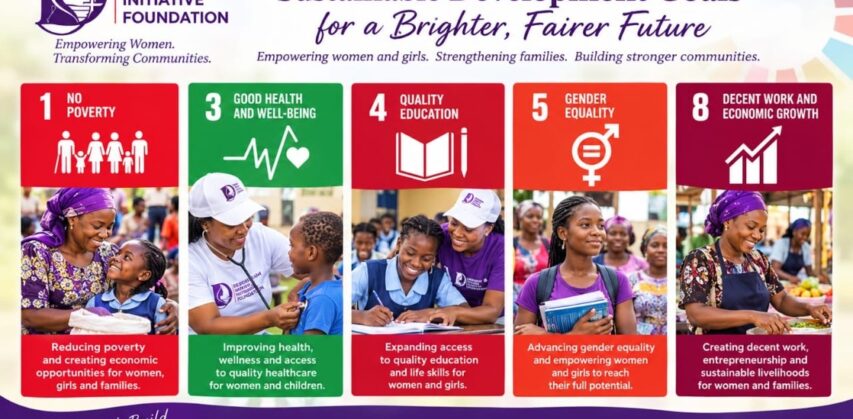
For Deborah Women Initiative Foundation, supporting women, girls, and vulnerable communities connects directly with five important goals: SDG 1, SDG 3, SDG 4, SDG 5, and SDG 8.
SDG 1: No Poverty
Poverty affects more than household income. It can limit access to food, healthcare, education, housing, and opportunities for independence.
Widows, single mothers, and women facing economic hardship may have to make difficult choices between competing needs. Immediate assistance can help, but lasting progress also requires access to skills, employment, entrepreneurship, and other sustainable livelihood opportunities.
The empowerment gap: Women cannot fully exercise their potential when financial insecurity continually restricts their choices.
SDG 3: Good Health and Well-being
Good health is essential to a woman’s ability to care for herself, support her family, and participate in society. Yet financial hardship and limited access to healthcare can prevent women and girls from receiving timely assistance.
Community outreach that supports access to medical care, promotes health awareness, and addresses practical barriers can contribute to improved wellbeing.
Emotional wellbeing also matters. Women navigating bereavement, caregiving pressures, or difficult circumstances need supportive communities and access to appropriate services.
The empowerment gap: A woman cannot thrive when her health needs are overlooked or essential care remains beyond her reach.
SDG 4: Quality Education
Education opens doors to knowledge, confidence, employment, and informed decision-making. For girls, access to quality education can expand future choices and strengthen their ability to participate in society.
However, school-related costs, household responsibilities, inadequate resources, and unsafe environments can interrupt educational opportunities.
Supporting girls requires attention to these barriers, alongside mentoring, skills development, digital literacy, and environments that encourage learning.
The empowerment gap: Every girl deserves the opportunity to develop her abilities, regardless of her family’s financial circumstances.
SDG 5: Gender Equality
Gender equality means ensuring that women and girls enjoy equal rights, opportunities, dignity, and participation in society.
Discrimination, harmful stereotypes, unequal access to resources, and violence against women and girls can undermine their safety and potential.
Empowerment requires communities to challenge these barriers, listen to women’s experiences, protect their rights, and create opportunities for them to participate meaningfully in decisions that affect their lives.
The empowerment gap: Women cannot achieve their full potential when their choices, safety, or contributions are limited by inequality.
SDG 8: Decent Work and Economic Growth
Access to decent work helps women build financial security, support their families, and contribute to economic development.
Yet some women face barriers to employment, skills training, business opportunities, and fair working conditions. Others possess valuable skills but lack the resources or networks needed to turn them into sustainable income.
Mentorship, vocational training, entrepreneurship support, and access to economic opportunities can help women strengthen their independence.
The empowerment gap: Talent and determination are not always enough when women lack access to the resources and opportunities required to succeed.
Closing The Gap Through Collective Action:
These five Sustainable Development Goals are closely connected. A girl whose education is interrupted may face fewer employment opportunities later in life. A woman experiencing poor health may struggle to maintain her livelihood. A widow without financial support may find it difficult to secure healthcare or keep her children in school.
This is why women’s empowerment must be approached holistically.
Deborah Women Initiative Foundation believes that meaningful progress begins with recognizing people’s needs, protecting their dignity, and supporting initiatives that help women, girls, and vulnerable communities access opportunities and improve their wellbeing.
Governments, NGOs, businesses, communities, donors, and individuals all have a role to play. Through collaboration, practical interventions, advocacy, and sustained support, we can help turn the promise of the SDGs into meaningful improvements in people’s lives.
The question is not simply whether women and girls deserve better opportunities. It is whether we are prepared to work together to make those opportunities accessible.
When dignity is protected, health is supported, education is accessible, equality is advanced, and decent work becomes attainable, women and girls are better positioned to thrive.
Let us move beyond good intentions and take meaningful action towards a future where no woman or girl is left behind.